What header(s) are used in authentication and authorization
 **The Authorization and Proxy-Authorization request headers contain the credentials to authenticate a user agent with a (proxy) server. Here, the
What is safe to put into a JWT
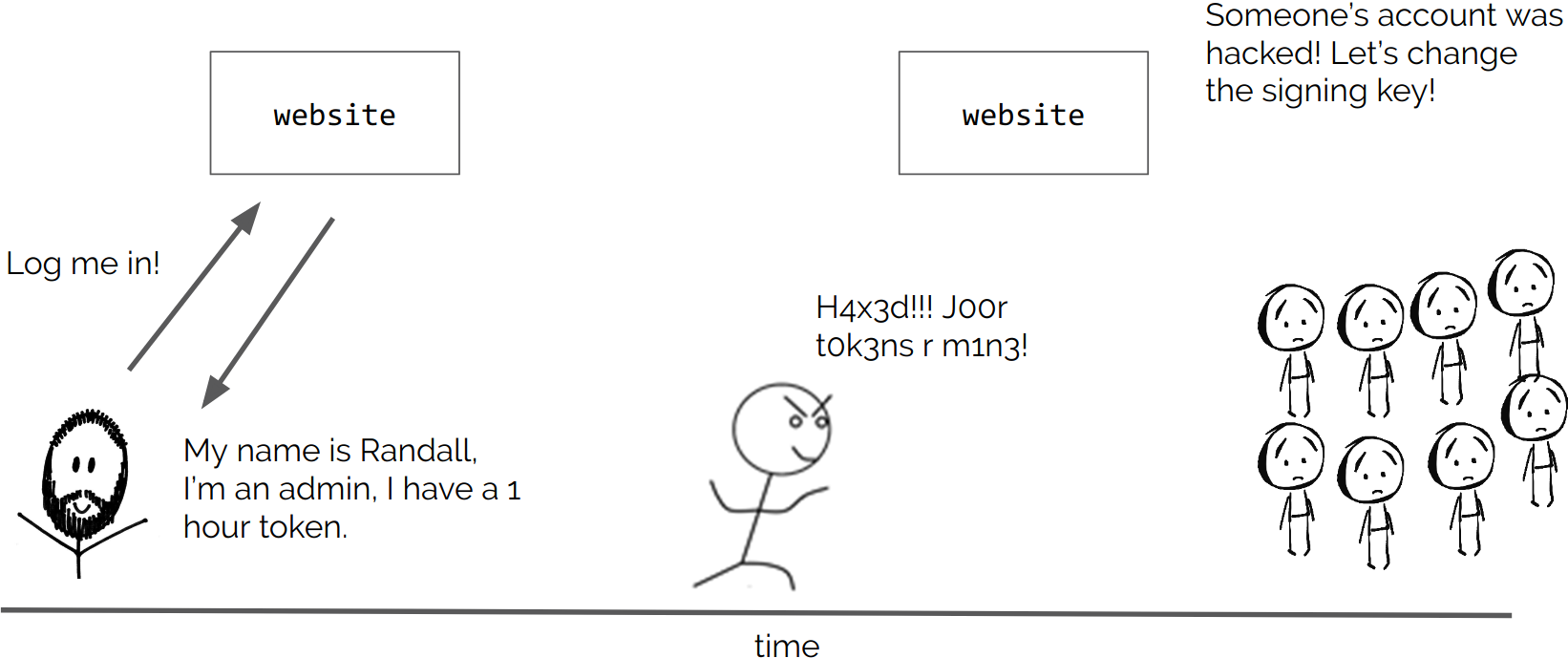
A JWT needs to be stored in a safe place inside the user’s browser. … To keep them secure, you should always store JWTs inside an httpOnly cookie. This is a special kind of cookie that’s only sent in HTTP requests to the server. It’s never accessible (both for reading or writing) from JavaScript running in the browser.
How are JWTs validated

Check signature. The last segment of a JWT is the signature, which is used to verify that the token was signed by the sender and not altered in any way. The Signature is created using the Header and Payload segments, a signing algorithm, and a secret or public key (depending on the chosen signing algorithm)
| Term | Definition |
|---|---|
| RBAC | Role-based access control (RBAC) restricts network access based on a person’s role within an organization and has become one of the main methods for advanced access control. The roles in RBAC refer to the levels of access that employees have to the network |
| User Roles | User Roles are permission sets that control access to areas and features within the Professional Archive Platform. Each User account requires a Role assignment. |
| JWT Token | JSON Web Token (JWT) is an open standard (RFC 7519) that defines a compact and self-contained way for securely transmitting information between parties as a JSON object. This information can be verified and trusted because it is digitally signed. |